Step 1 of 3
Film or upload a riding video
For a clean screening, aim for:
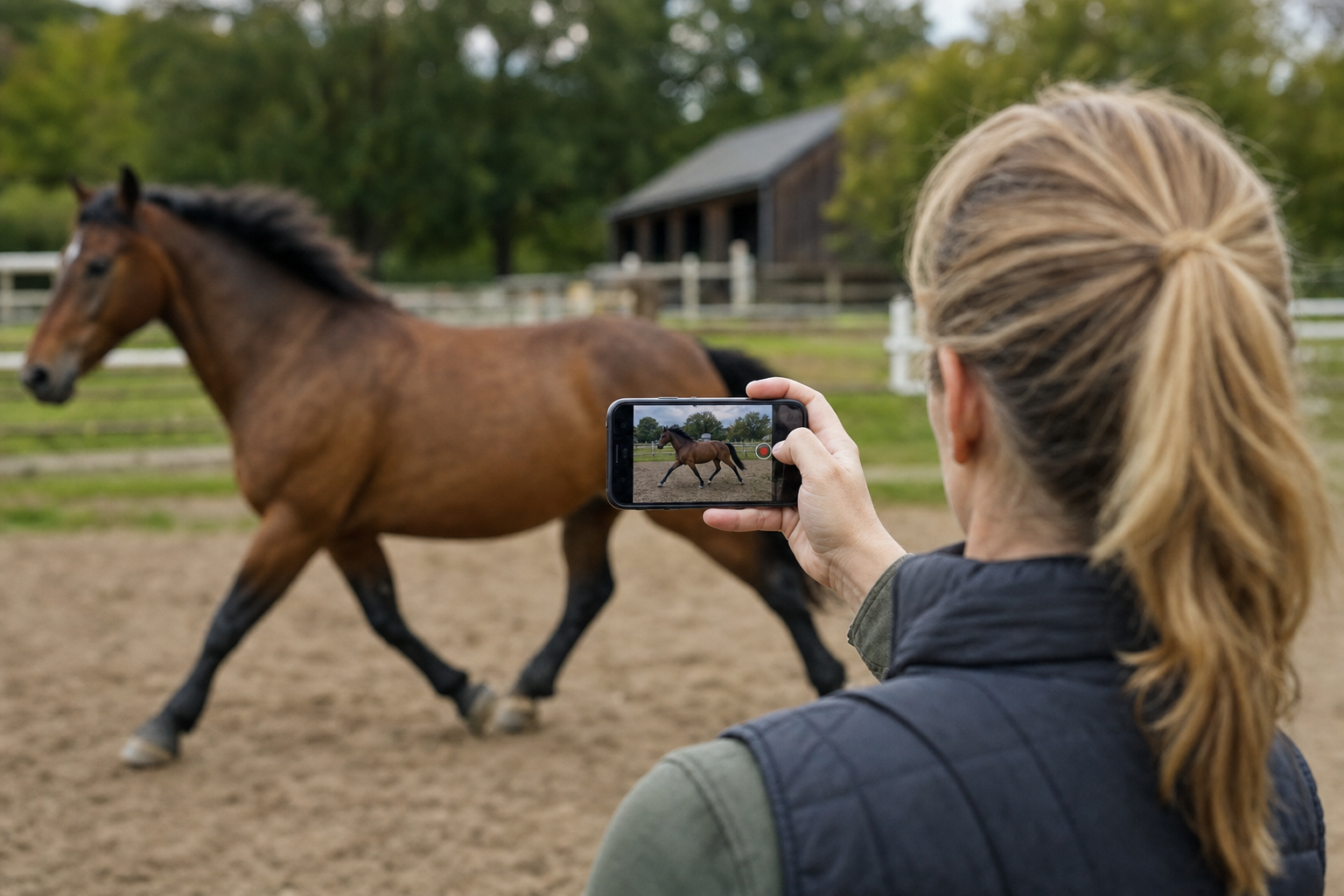
- Side view: ride a circle around the person filming. The camera person stands in the middle of a 15–20 m circle and turns with the rider, so the rider stays side-on and the same distance away the whole time. Keep the circle on flat, even ground.
- Front or back view: ride straight down the centerline toward or away from the camera
- Rider's full body in frame — head through foot clearly visible
- Good, even lighting — avoid strong backlight or deep shadow
- Phone held steady at roughly shoulder height
- At least 10 seconds of continuous, steady riding at your usual gait — about one full circle for a side view (10–20 seconds is ideal)
- A brightly lit clip (or your phone's slo-mo mode) — the foot moves quickly at a trot, and sharper frames track it more reliably than motion-blurred ones
- Optional, for even smoother tracking: a small piece of brightly colored vet wrap (or tape, or a marker dot) on the boot/foot — pick a color that stands out from clothing and the horse's coat. RideAlign automatically detects it and locks on more reliably.
- Same goes for the head: a strip of bright vet wrap or a sticker on the front or top of the helmet gives the tracker something distinct to lock onto — helmets are usually a solid dark color, which is easy to lose against trees, fences, or other cluttered backgrounds, especially while the camera is panning to follow the horse.
Our tip: use vet wrap for color markers
We recommend brightly colored vet wrap (self-adhesive bandage) for your tracking markers. It holds on its own and won't leave residue on your boots or helmet. On the horse, wrap it around the long pastern bone — between the fetlock and the hoof — so boots or polo wraps won't get in the way.
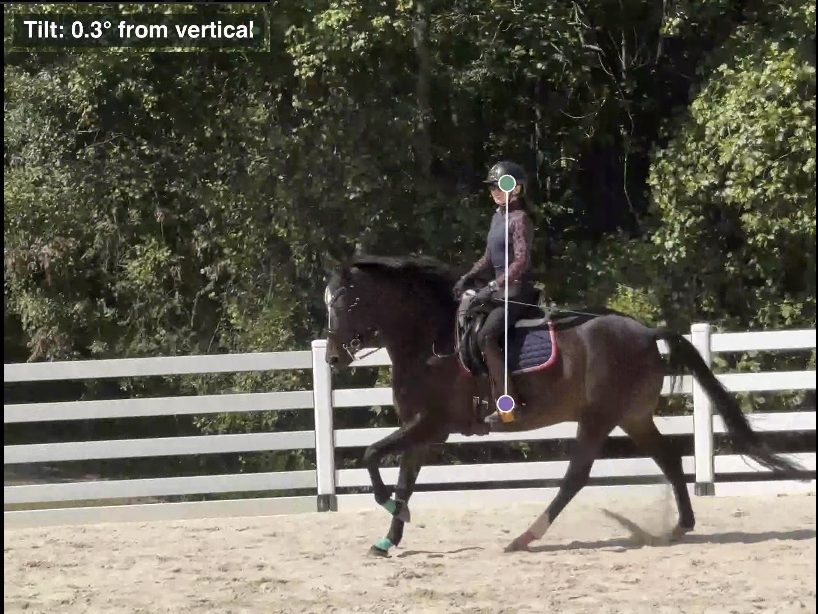
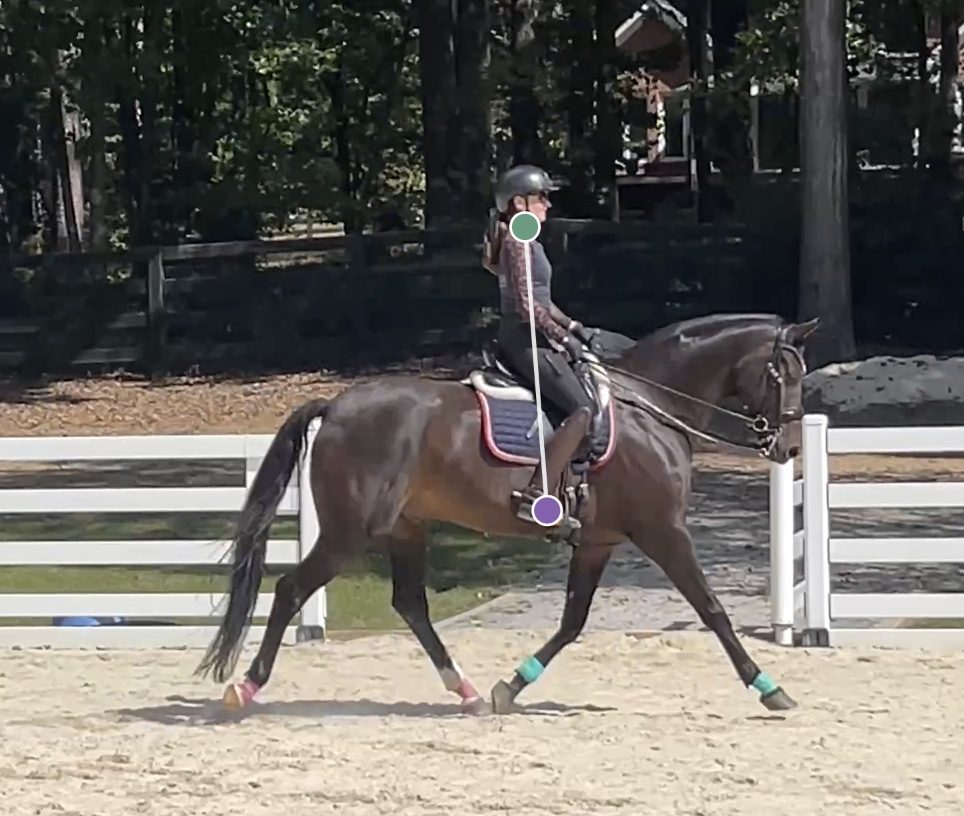
Real examples from RideAlign clips
Stills from real SeatCheck screenings, filmed on a phone. The green dot is the head point, the purple dot is the foot point, and the line between them is the balance line RideAlign scores.
Camera access wasn't available — you can upload a video instead.
REC 0:00
Ready to go
Your clip
Who is riding?
Results save to this rider's history automatically
Same setup as last time?
Where should this video live?
You can change this any time — nothing is uploaded unless you choose to